# End-of-Life Care Decision Making: A Guide for Families and Providers
End-of-life care is a deeply personal and often challenging experience for families and healthcare providers. Making decisions during this time can be overwhelming, especially when emotions run high. The aim of this guide is to simplify the end-of-life decision-making process, providing families and providers with the tools to make informed choices that honor the wishes and dignity of the individual.
End-of-life care refers to the support and medical care given during the time surrounding death. This type of care does not only involve medical treatment but also includes psychological, social, and spiritual support. It is crucial for families and healthcare providers to discuss and plan for end-of-life care in advance, to ensure the wishes of the individual are respected.
What is Advance Care Planning?
Advance care planning is a process that supports adults at any age or stage of health in understanding and sharing their personal values, life goals, and preferences regarding future medical care. The goal is to ensure people receive medical care that is consistent with their values, goals, and preferences during serious and chronic illness.
Key Aspects of Decision Making in End-of-Life Care
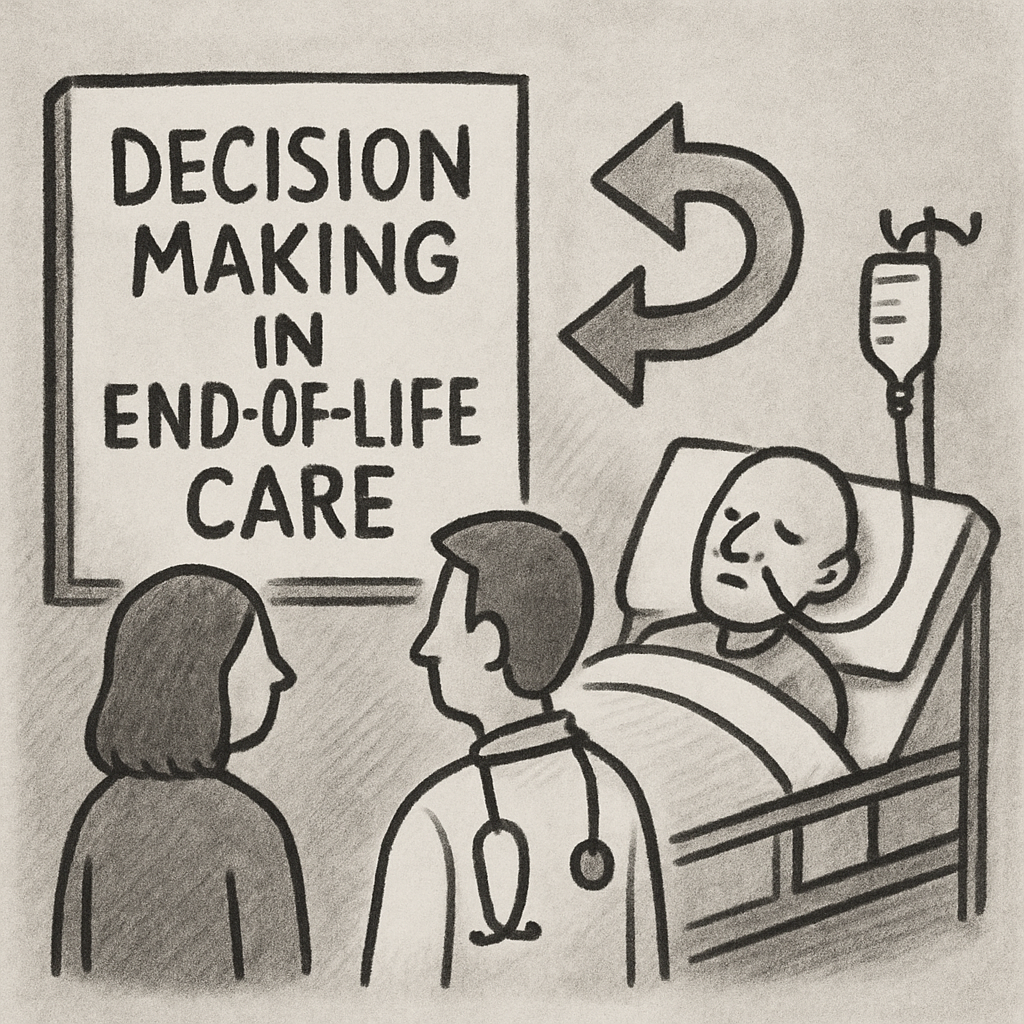
Decision making in end-of-life care involves several key components:
Communication
Effective communication between the patient, family, and healthcare providers is essential. It ensures that everyone is on the same page regarding the patient’s wishes and the care they want to receive. Open discussions about prognosis, treatment options, and personal values should be encouraged.
Understanding Treatment Options
Families and providers should understand all available treatment options. This includes life-sustaining treatments such as mechanical ventilation or feeding tubes, as well as palliative care and hospice services, which focus on comfort rather than curative treatments.
Legal and Ethical Considerations
Legal documents such as living wills and healthcare power of attorney are critical in end-of-life decision making. These documents ensure that the patient’s wishes are followed when they are no longer able to communicate their desires. Ethical considerations, including respecting the patient’s autonomy and quality of life, should also guide decision making.
Guidelines for Families and Providers
The following guidelines can help families and providers navigate end-of-life care decision making:
Start the Conversation Early
It is never too early to begin discussions about end-of-life care. Early conversations allow individuals to express their wishes and preferences, and for families and providers to ask questions and clarify any doubts.
Document Preferences
Encourage individuals to document their care preferences in advance directives. These documents guide healthcare providers and families in making decisions that align with the individual’s values and desires.
Collaborate with Healthcare Providers
Providers play a crucial role in guiding families through the decision-making process. They can provide valuable information about treatment options, prognosis, and the potential benefits and burdens of different interventions.
Respect the Individual’s Wishes
Always prioritize the wishes of the individual receiving care. Their values and preferences should guide all decision-making processes, even if it means choosing comfort care over more aggressive treatments.
The Role of Healthcare Providers in Decision Making

by Vitaly Gariev (https://unsplash.com/@silverkblack)
Healthcare providers have a significant role in end-of-life decision making. They are responsible for:
- Offering clear and compassionate communication about the patient’s condition and available options.
- Providing guidance on the potential outcomes and implications of each option.
- Supporting the family in understanding and respecting the patient’s wishes.
Providers should act as advocates for the patient, ensuring their voice is heard and their choices are respected.
Challenges in End-of-Life Decision Making
End-of-life decision making can be fraught with challenges, including:
Emotional Stress
The emotional stress of anticipating the loss of a loved one can make decision making difficult. Families may struggle to balance their own emotions with the need to respect the patient’s wishes.
Conflicting Opinions
Families may have conflicting opinions about the best course of action, leading to tension and discord. It is essential to focus on the patient’s desires and to find common ground.
Ethical Dilemmas
Providers and families may face ethical dilemmas, particularly when the patient’s wishes conflict with their own beliefs or when there is uncertainty about the patient’s desires.
Conclusion
End-of-life care decision making is a complex process that requires careful consideration, open communication, and respect for the individual’s wishes. By understanding the key aspects of decision making, collaborating with healthcare providers, and starting conversations early, families and providers can navigate this challenging time with compassion and clarity.